





 asdar.id menyediakan Member Premium Download untuk download file tanpa embel-embel iklan dan halaman, apa lagi harus menunggu timer yang begitu lama. Dengan berlangganan Member Premium Download, semua file dapat didownload dengan singkat langsung menuju ke sumbernya!, klik DISINI untuk DAFTAR atau DISINI untuk LOGIN :-) Jika ada pertanyaan silahkan hubungi Admin DISINI. Untuk cara download file Member Free Download, bisa membaca Tutorial Download yang ada dibawah Timer (halaman Safelink) saat menekan tombol download.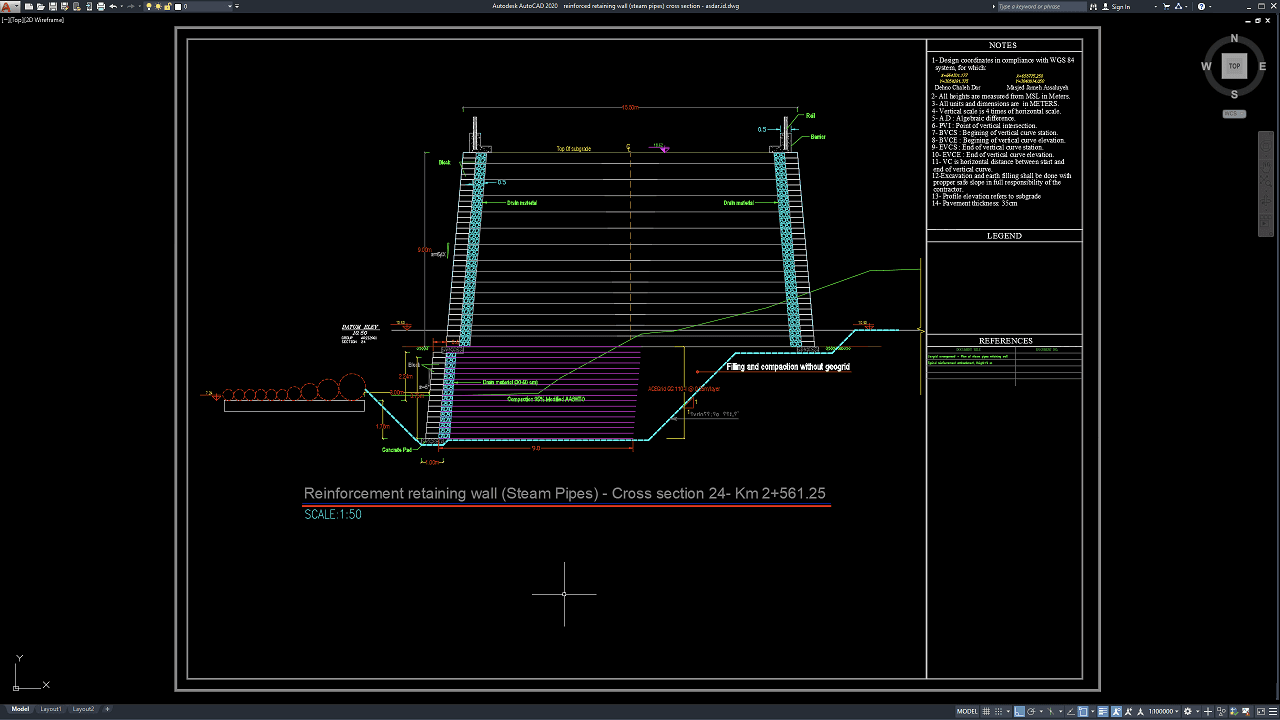
Retaining walls are widely used to support soil masses and protect underground utility corridors, especially in industrial facilities where steam pipelines are installed below or beside roadways. A properly designed reinforced retaining wall cross section helps ensure soil stability, protects buried steam pipes from external loads, and provides long-term structural performance. Accurate construction drawings are essential for engineers and contractors to coordinate structural reinforcement with utility installation.
In this article, we share a reference for Reinforced Retaining Wall (Steam Pipes) Cross Section DWG AutoCAD that can be used by civil engineers, structural engineers, geotechnical engineers, utility designers, consultants, contractors, drafters, students, and construction professionals involved in retaining wall and underground pipeline projects.
What Is a Reinforced Retaining Wall (Steam Pipes) Cross Section?
A reinforced retaining wall cross section is a technical drawing that illustrates the structural components of a retaining wall together with the surrounding soil profile and underground steam pipe installation. It provides detailed information about wall geometry, reinforcement placement, pipe locations, foundation levels, drainage systems, backfill materials, and construction dimensions.
These drawings are commonly prepared for industrial plants, power stations, district heating systems, petrochemical facilities, utility corridors, and infrastructure projects where underground steam pipelines require structural protection.
Importance of Reinforced Retaining Wall Cross Sections
Accurate retaining wall cross sections help engineers evaluate earth pressure, reinforcement requirements, foundation stability, pipe protection, drainage performance, and long-term structural safety. Proper detailing minimizes construction risks while ensuring compliance with engineering design standards.
Well-prepared retaining wall drawings provide:
- Better retaining wall design
- Improved underground utility protection
- Accurate reinforcement detailing
- Safer excavation planning
- Better drainage design
- Improved construction coordination
- Reduced structural risks
- Compliance with engineering standards
Without proper structural detailing, retaining walls may experience excessive movement, cracking, drainage failure, or damage to underground steam pipelines.
Download Reinforced Retaining Wall (Steam Pipes) Cross Section DWG AutoCAD
Proper reinforcement retaining wall cross-section detailing for underground steam pipelines is essential to ensure earth pressure resistance, structural stability, drainage efficiency, utility protection, and long-term durability in transportation, industrial, and civil engineering projects. Structural and geotechnical engineers must carefully consider retaining wall geometry, reinforced concrete wall sections, steam pipe locations, foundation dimensions, backfill materials, drainage layers, compaction requirements, groundwater conditions, reinforcement detailing, and construction standards throughout the design and installation process.
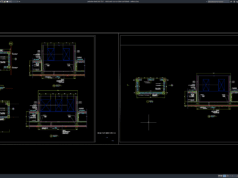
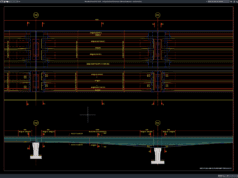
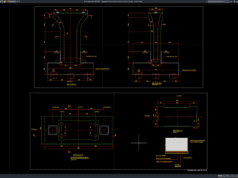
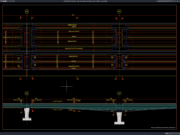
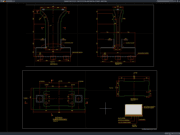
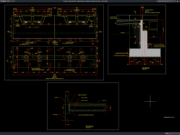
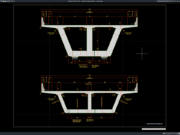
Detailed drawings such as reinforced retaining wall cross sections, steam pipe corridor layouts, reinforced concrete wall details, footing and foundation configurations, drainage material placement, compacted backfill zones, geotextile and filter layers, pipe protection systems, road embankment profiles, elevation references, and dimensional specifications are important to help structural engineers, geotechnical engineers, contractors, utility designers, and construction supervisors accurately understand both structural and underground utility requirements. As shown in the drawing, the section illustrates a Reinforced Retaining Wall (Steam Pipes) installation featuring reinforced concrete retaining walls on both sides, an underground steam pipe corridor, concrete pad foundations, compacted engineered fill, drainage material behind the retaining walls, road and railway embankment profiles, protective barriers and railings, embankment slopes, reference elevations, horizontal dimensions, and construction notes that provide a complete reference for safe retaining wall construction and protected steam pipeline installation.
Incomplete or inaccurate reinforced retaining wall cross-section drawings can result in excessive earth pressure, retaining wall displacement, poor drainage performance, differential settlement, damage to underground steam pipelines, construction conflicts, increased maintenance costs, and reduced structural reliability. Therefore, accurate engineering documentation and proper coordination between structural engineers, geotechnical engineers, utility designers, surveyors, consultants, and construction teams are essential to ensure safe excavation, reliable retaining wall performance, effective pipeline protection, compliance with engineering standards, and the long-term serviceability of reinforced retaining wall systems designed for underground steam pipe infrastructure.
Detailed AutoCAD DWG files also allow engineers to modify and adapt the retaining wall and underground steam pipe protection design according to project specifications, soil conditions, utility requirements, and construction standards. The drawing file shared in this article is available in DWG AutoCAD format and can be used as a reference for reinforced retaining wall construction, underground steam pipeline protection, drainage systems, and industrial infrastructure projects. This file is compatible with various AutoCAD versions and can be edited according to your project requirements, reinforcement details, pipe configurations, foundation dimensions, and technical standards.
For those of you who prefer a simpler and faster download experience on asdar.id, I also provide a Premium Member Download service that allows direct access to the original file. This way, you will not be disturbed by excessive advertisements or multiple redirect pages during the download process. If you are interested, please register HERE. Please download the Reinforced Retaining Wall (Steam Pipes) Cross Section DWG AutoCAD file below:
Reinforced Retaining Wall (Steam Pipes) Cross Section DWG AutoCAD
| Google Drive | DOWNLOAD[217.68KB] |
| Mediafire | DOWNLOAD[217.68KB] |
Rar password: www.asdar.id
Important Note: If you encounter a problem where the WinRAR file cannot be extracted or appears corrupted, the solution is to update the WinRAR application on your computer to the latest version. Download the latest version of WinRAR here.
If you would like to copy this article, please include the original source because I have seen some blogs repost the content without providing proper credit. Otherwise, please rewrite it using your own words. Respect and appreciate the work and effort of others.
The Reinforced Retaining Wall (Steam Pipes) Cross Section DWG AutoCAD file is a valuable reference for civil engineers, structural engineers, geotechnical engineers, utility designers, consultants, contractors, students, and construction professionals working on retaining wall and underground pipeline projects. With comprehensive retaining wall sections, reinforcement detailing, steam pipe layouts, drainage information, elevation references, and structural dimensions, this DWG file helps improve engineering accuracy, construction quality, utility protection, and overall project efficiency. Hopefully, this reference will be useful for your next retaining wall design, steam pipeline installation, industrial infrastructure project, or civil engineering application.
For those of you who are searching for Reinforced Retaining Wall (Steam Pipes) Cross Section working drawing references, DWG AutoCAD files can be an excellent solution for industrial facilities, utility corridors, railway infrastructure, underground steam pipeline systems, retaining wall construction, and civil engineering projects. The drawing includes reinforced retaining wall cross sections, underground steam pipe layouts, reinforced concrete wall details, foundation and footing configurations, drainage material placement, compacted backfill zones, embankment profiles, protective barriers, elevation references, dimensional specifications, and construction notes that help engineers accurately design retaining structures, protect underground utilities, improve drainage performance, and ensure safe, durable, and efficient construction. If you are looking for AutoCAD files for project documentation, engineering design, or educational reference, asdar.id provides a wide collection of DWG drawings related to reinforced retaining walls, underground utility structures, steam pipeline installations, structural engineering, geotechnical engineering, infrastructure projects, and various civil engineering applications.