





 asdar.id menyediakan Member Premium Download untuk download file tanpa embel-embel iklan dan halaman, apa lagi harus menunggu timer yang begitu lama. Dengan berlangganan Member Premium Download, semua file dapat didownload dengan singkat langsung menuju ke sumbernya!, klik DISINI untuk DAFTAR atau DISINI untuk LOGIN :-) Jika ada pertanyaan silahkan hubungi Admin DISINI. Untuk cara download file Member Free Download, bisa membaca Tutorial Download yang ada dibawah Timer (halaman Safelink) saat menekan tombol download.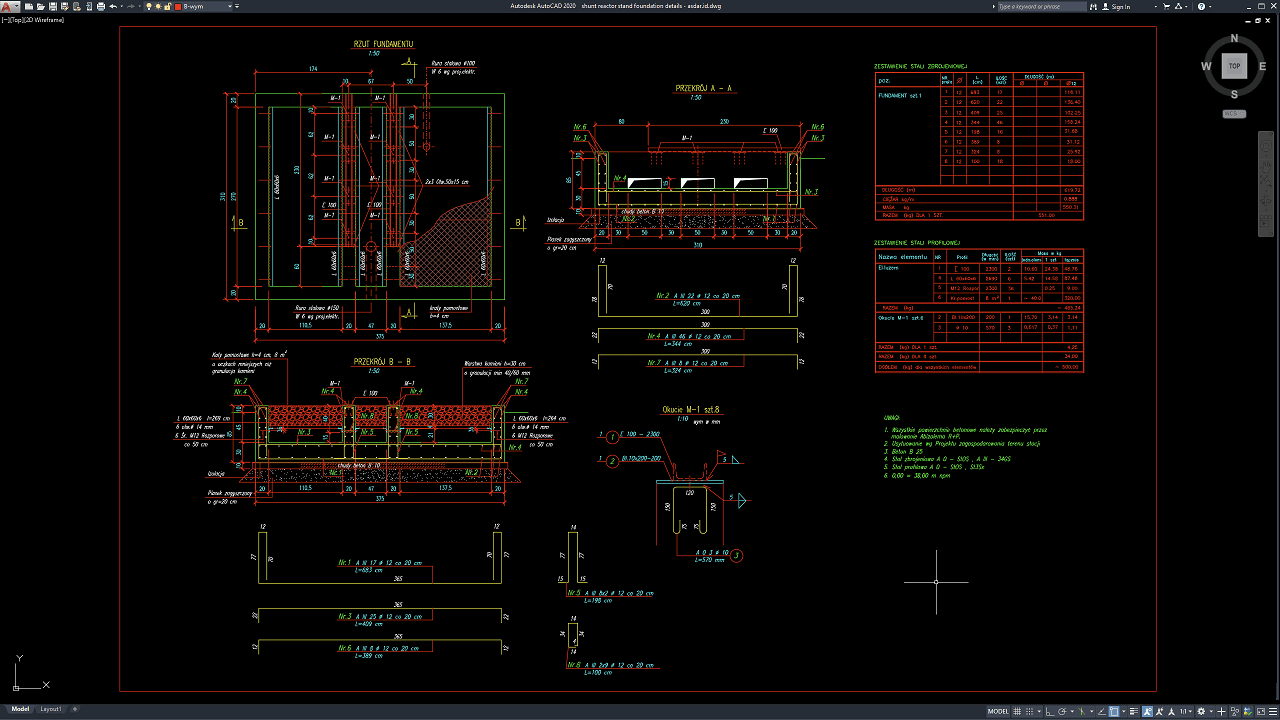
Shunt reactors are important components in high-voltage transmission and substation systems because they help control voltage by absorbing excess reactive power, particularly on long transmission lines and cable networks operating under light-load conditions. Because these electrical units can be heavy and may transfer significant static, operational, wind, and seismic loads to their supports, the structural foundation beneath the reactor stand must be designed and constructed with high accuracy.
In this article, we share a reference for Shunt Reactor Stand Foundation Details DWG AutoCAD that can be useful for civil engineers, structural engineers, electrical engineers, substation designers, EPC contractors, quantity surveyors, rebar detailers, CAD technicians, BIM coordinators, construction managers, and engineering students.
The drawing can provide a practical reference for shunt reactor foundation design, high-voltage substation engineering, reinforced concrete detailing, structural engineering services, equipment foundation construction, BIM coordination, construction cost estimation, quantity takeoff, and EPC project management.
What Is a Shunt Reactor?
A shunt reactor is an electrical device used in high-voltage power networks to absorb reactive power and help control system voltage. It is commonly associated with long transmission lines, underground cables, and high-voltage substations where excessive voltage may develop during lightly loaded operating conditions.
From a power-system perspective, the reactor helps compensate for the capacitive characteristics of the network. By absorbing reactive power, it can contribute to more stable voltage conditions and improved operation of transmission infrastructure.
Depending on the power system, shunt reactors may be connected directly to transmission buses, transformer tertiary systems, or other designated high-voltage connections.
Because these units can be large and heavy, their civil and structural support systems must be coordinated carefully with the electrical design.
What Is a Shunt Reactor Stand Foundation?
A shunt reactor stand foundation is a reinforced concrete structural element designed to support the steel stand or mounting frame carrying the reactor.
The foundation transfers the reactor weight, steel support reactions, environmental loads, and other structural forces safely into the ground while maintaining the required equipment position and elevation.
Depending on the project, the foundation may consist of reinforced concrete footings, pedestals, base blocks, anchor bolts, embedded plates, grout layers, and supporting concrete elements.
The final geometry must be based on approved equipment dimensions, structural reactions, steel stand details, geotechnical conditions, and project-specific engineering requirements.
Download Shunt Reactor Stand Foundation Details DWG AutoCAD
Proper Shunt Reactor Stand Foundation Details DWG AutoCAD drawings are essential for accurately coordinating reinforced concrete foundation geometry, reactor support frames, embedded steel components, reinforcement layouts, construction levels, and equipment anchorage within high-voltage substation projects. Civil engineers, structural engineers, electrical engineers, EPC contractors, rebar detailers, steel fabricators, and site teams must carefully coordinate foundation dimensions, reinforcement positions, steel support locations, equipment centerlines, and structural levels to achieve a stable, durable, and accurately constructed foundation for shunt reactor installations.
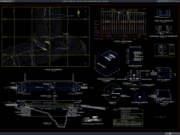
Detailed drawings such as shunt reactor foundation plans, Sections A-A and B-B, reinforcement details, embedded steel support details, rebar schedules, structural steel schedules, concrete specifications, and dimensional references help engineering and construction teams understand the complete foundation configuration before excavation, reinforcement installation, concrete placement, and equipment erection begin. As shown in the drawing, the CAD sheet contains a rectangular reinforced concrete foundation plan with several internal support zones, detailed Section A-A and Section B-B, reinforcement bar arrangements and bending details, embedded steel components identified around the reactor stand supports, and construction layers beneath the foundation. The drawing also includes comprehensive reinforcing steel and structural steel schedules showing bar positions, diameters, lengths, quantities, profile sizes, and estimated material weights.
Incomplete or inaccurate Shunt Reactor Stand Foundation Details may result in incorrectly positioned support components, inadequate reinforcement, unsuitable equipment elevations, conflicts between embedded steel and rebar, foundation misalignment, and costly modifications during reactor stand installation. Accurate civil and structural documentation and proper coordination between electrical engineers, structural engineers, civil engineers, equipment suppliers, EPC contractors, steel fabricators, quantity surveyors, and site supervisors are therefore important for achieving reliable and precisely positioned high-voltage equipment foundations.
Detailed AutoCAD DWG files also allow engineers and contractors to review and modify foundation dimensions, reinforcement spacing, embedded support positions, structural steel details, concrete levels, sectional drawings, and material schedules according to specific shunt reactor requirements and applicable structural standards. The drawing shown specifies B25 concrete, reinforcement steel grades, structural steel components, compacted foundation layers, and detailed material schedules, providing a practical reference for shunt reactor foundation design, reinforced concrete detailing, embedded steel coordination, reinforcement quantity planning, substation civil works, and high-voltage infrastructure construction documentation.
For those of you who prefer a simpler and faster download experience on asdar.id, I also provide a Premium Member Download service that allows direct access to the original file. This way, you will not be disturbed by excessive advertisements or multiple redirect pages during the download process. If you are interested, please register HERE. Please download the Shunt Reactor Stand Foundation Details DWG AutoCAD file below:
Shunt Reactor Stand Foundation Details DWG AutoCAD
| Google Drive | DOWNLOAD[444.12KB] |
| Mediafire | DOWNLOAD[444.12KB] |
Rar password: www.asdar.id
Important Note: If you encounter a problem where the WinRAR file cannot be extracted or appears corrupted, the solution is to update the WinRAR application on your computer to the latest version. Download the latest version of WinRAR here.
If you would like to copy this article, please include the original source because I have seen some blogs repost the content without providing proper credit. Otherwise, please rewrite it using your own words. Respect and appreciate the work and effort of others.
Shunt Reactor Stand Foundation Details DWG AutoCAD drawings provide valuable technical references for understanding how shunt reactor support structures interact with reinforced concrete foundations, pedestals, anchor bolts, reinforcement, grounding systems, and surrounding substation civil works.
Accurate foundation documentation improves coordination between electrical engineers, structural engineers, civil engineers, geotechnical consultants, equipment suppliers, EPC contractors, quantity surveyors, and construction teams. It can also support more reliable BIM coordination, construction cost estimation, quantity takeoff, procurement planning, construction scheduling, quality control, and long-term high-voltage infrastructure management.